


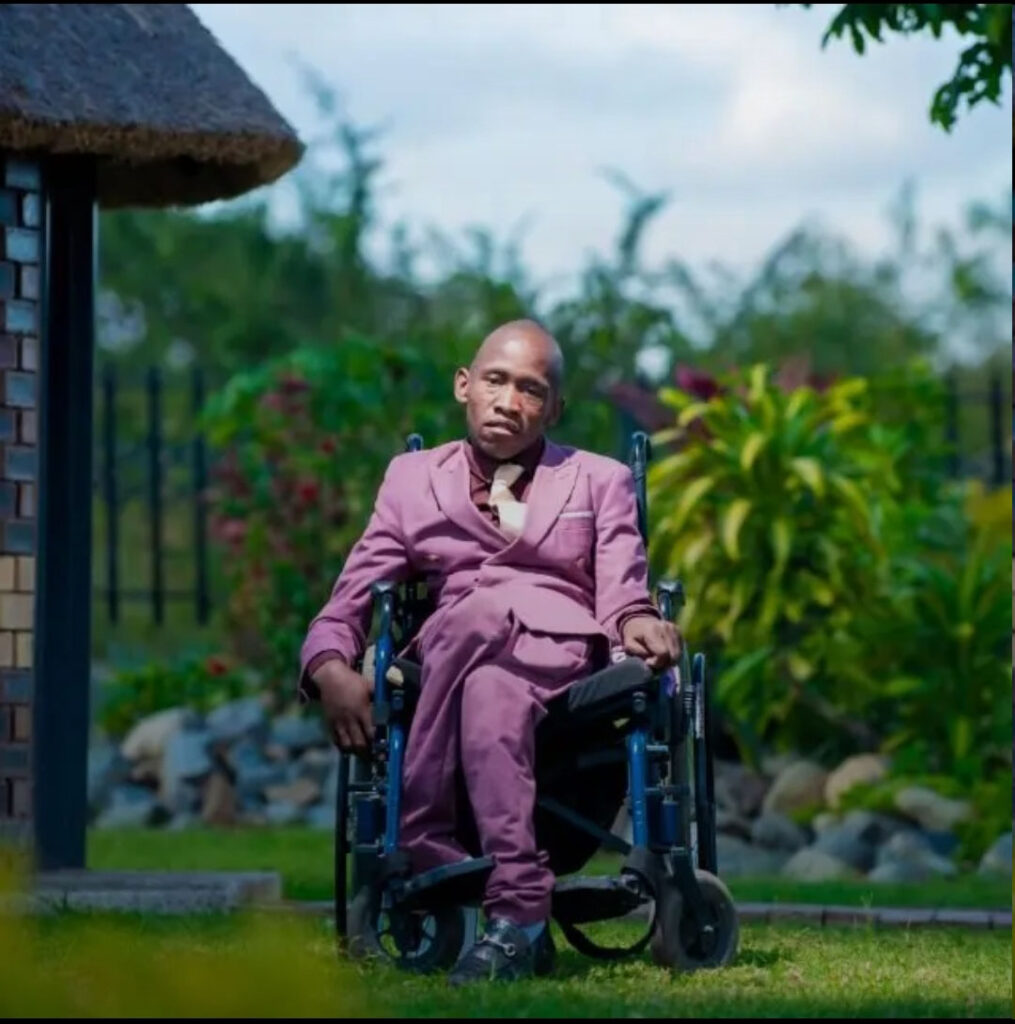
Richard Shumba Let’s Make A Difference Disability Zimbabwe has urged Parliament to strengthen the Persons with Disabilities Act, 2025. They warn that while recognizing disability rights in legislation is important, it will have limited impact unless government institutions are held accountable for implementing those rights. In a statement to this publication, the organization, represented by
Richard Shumba
Let’s Make A Difference Disability Zimbabwe has urged Parliament to strengthen the Persons with Disabilities Act, 2025. They warn that while recognizing disability rights in legislation is important, it will have limited impact unless government institutions are held accountable for implementing those rights.
In a statement to this publication, the organization, represented by Advocate Nigel P. Tahwa, argued that the legislation requires clearer enforcement mechanisms, measurable accessibility standards, adequate funding, and stronger provisions to protect the autonomy of persons with disabilities.
While acknowledging the law’s enactment as a significant milestone, Tahwa emphasized that the central challenge remains ensuring that the rights it recognizes translate into real improvements in the lives of individuals with disabilities.
“The existence of rights in legislation is not enough. The law must specify who is responsible, what needs to be done, by when, how it will be funded, and what happens when obligations are not met,” he stated.
The submission highlights the gaps between the Persons with Disabilities Act and the more detailed commitments outlined in the Zimbabwe National Disability Policy of June 2021. It argues that Parliament should strengthen the law to make those commitments enforceable.
One major concern raised by the organization is the lack of a clear and accessible mechanism for persons with disabilities to seek redress when their rights are violated. Although Section 52 of the Act provides an appeals process for individuals dissatisfied with decisions made by the National Disability Affairs Board or its Director, the organization argues that this should not be mistaken for a comprehensive mechanism for addressing violations of substantive rights.
They recommend establishing an independent, accessible, and affordable complaints framework to address violations by public institutions, private service providers, employers, schools, health facilities, and transport operators.
This proposed framework would allow complaints to be made through representatives or organizations of persons with disabilities where appropriate and would ensure access in various formats, including sign language, Braille, easy-read, and audio formats, while also maintaining confidentiality and protection against retaliation.
Accessibility is another critical area the organization wants Parliament to address through enforceable obligations rather than voluntary compliance. While Section 17 of the Act acknowledges access to public places, transport, information, and communication, the submission argues that the lack of clear standards, implementation deadlines, and compliance mechanisms could undermine this provision.
Tahwa stated that public infrastructure and services should be accessible by design, rather than relying on occasional adjustments or the goodwill of service providers. “Accessibility cannot remain a matter of goodwill or occasional accommodation,” he asserted.
The organization is calling for mandatory accessibility audits and time-bound improvement plans for existing public buildings, schools, hospitals, courts, polling stations, roads, pavements, and public transport. They also advocate for the incorporation of universal design into new infrastructure projects, procurement processes, and digital platforms, along with national minimum accessibility standards.
The submission raises concerns about the provisions regarding legal capacity and autonomy, particularly Section 22 of the Act. It argues that this section should be strengthened to ensure that persons with disabilities are equally recognized before the law and supported in making decisions according to their own will and preferences. Specifically, they recommend reviewing the reference to persons being of “sound mind” in Section 22(5), warning that this wording could undermine equal legal capacity. They advocate for supported decision-making as the standard, with safeguards against abuse, undue influence, and arrangements that allow another person to override the choices of individuals with disabilities.
Employment inclusion also emerged as a significant area needing legislative attention. Section 36 of the Act provides for a two percent employment quota for qualifying government institutions and parastatals with at least 50 employees. Meanwhile, the 2021 National Disability Policy sets a broader objective of striving for a minimum of 15 percent of the workforce across organizations and sectors to comprise persons with disabilities.
Tahwa argued that the two percent requirement should be viewed as a starting point rather than a limit on employment opportunities. “We recommend that the two percent requirement be treated as a minimum starting point, not a ceiling,” he said.
The organization is asking Parliament to introduce progressive, time-bound employment targets, annual reporting, and measures to improve accessible recruitment, workplace accommodation, retention, and career advancement.
An important implementation question arises from the difference between the two targets: Will the statutory quota serve as a catalyst for broader employment inclusion, or will it merely be a benchmark that institutions use to measure compliance, despite a more ambitious policy objective?
Beyond employment, the submission stresses that disability inclusion should be a shared responsibility across the government, not confined to the ministry responsible for disability affairs or the National Disability Affairs Board. It recommends that every government ministry, local authority, and public entity appoint a senior disability focal person, develop a costed disability inclusion plan, and publish annual reports detailing their implementation progress.
The proposed reporting framework would include information on budgets, expenditures, accessibility barriers, complaints, remedies, and outcomes, with data disaggregated by disability, sex, age, and location where applicable.
The organization is also advocating for stronger provisions for inclusive education, healthcare, protection from violence and abuse, social protection, and independent living. Its recommendations include accessible learning materials, early intervention programs, informed consent in healthcare, disability-sensitive reporting channels for abuse, accessible shelters, and improved access to assistive devices.
On disaster preparedness, it calls for accessible early-warning messages, evacuation arrangements, and emergency shelters, with organizations of persons with disabilities involved in planning and response processes.
The submission raises concerns that administrative registration requirements under the Private Voluntary Organizations Act could unintentionally exclude emerging and under-resourced grassroots disability organizations from public consultations and advocacy. It recommends clarifying that registration requirements for accessing state grants should not hinder organizations from participating in policymaking or representing their members.
Regarding accountability, the organization has urged Parliament to review Section 9, particularly the wording concerning immunity for acts or omissions undertaken in good faith and/or gross negligence. It argues that immunity should not protect against gross negligence, willful misconduct, corruption, abuse of office, or violations of rights protected by the Act.
Tahwa has identified three immediate priorities for Parliament:
1. Adopting regulations and national minimum standards on accessibility, reasonable accommodation, and complaints mechanisms within 12 months;
2. Requiring costed disability inclusion plans and focal persons across government;
3. Developing a progressive employment roadmap alongside a supported decision-making framework within 12 to 18 months.
The organization’s submission is rooted in the principle of “Nothing about us without us,” which should guide law-making, budgeting, implementation, and monitoring through meaningful participation by persons with disabilities and their representative organizations.
It further asserts that representation on the National Disability Affairs Board should be transparent and reflect the diversity of disability experiences, including those of women, young people, persons with intellectual and psychosocial disabilities, Deaf individuals, and people in rural communities.
The Persons with Disabilities Act, 2025, acknowledges a wide range of rights, including equality, accessibility, education, healthcare, employment, independent living, and access to justice. However, the organization’s central concern is whether these rights will be backed by enforceable obligations, adequate resources, and consequences for non-compliance.
For Tahwa and Let’s Make A Difference Disability Zimbabwe, the legislation’s effectiveness should ultimately be measured not by the number of rights stated in the law, but by whether persons with disabilities can exercise those rights equally in their everyday lives.















Leave a Comment
Your email address will not be published. Required fields are marked with *