


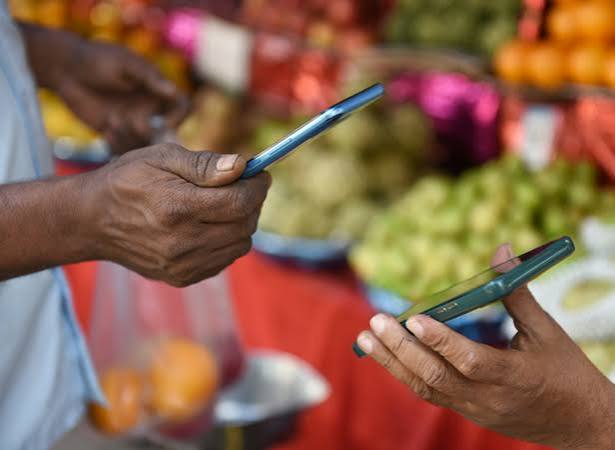
Richard Shumba Mobile money services, initially introduced to promote financial inclusion in Zimbabwe, have also exposed consumers to fraud, money laundering and financial exploitation, raising concerns over the effectiveness of regulatory safeguards, Midlands State University academic Theo Tsokota has said. In an interview with this publication, Tsokota said mobile money platforms have become increasingly vulnerable
Richard Shumba
Mobile money services, initially introduced to promote financial inclusion in Zimbabwe, have also exposed consumers to fraud, money laundering and financial exploitation, raising concerns over the effectiveness of regulatory safeguards, Midlands State University academic Theo Tsokota has said.
In an interview with this publication, Tsokota said mobile money platforms have become increasingly vulnerable to abuse, particularly where regulatory oversight and consumer protection mechanisms are inadequate.
“Mobile money transfer, if not properly implemented, can cripple a country’s economy and cause adverse effects on vulnerable groups,” Tsokota said
He said some mobile money agents had taken advantage of cash shortages by charging exorbitant withdrawal premiums, placing additional financial pressure on ordinary consumers.
Tsokota also highlighted the relationship between mobile money transactions and activities on the parallel foreign currency market, arguing that the misuse of mobile money could undermine economic stability.
Fraudulent transactions were another concern, with scammers reportedly using fake registrations, unregistered telephone lines and misleading messages promising prizes, loans and government agricultural inputs to defraud unsuspecting subscribers.
He further warned that mobile money platforms could be exploited for money laundering, with criminals using multiple accounts and telephone numbers to conceal the movement of illicit funds.
He identified regulatory coordination challenges involving the Reserve Bank of Zimbabwe and the Postal and Telecommunications Regulatory Authority of Zimbabwe as potential weaknesses in monitoring mobile money activities.
Beyond financial crime, Tsokota highlighted consumer protection challenges, including high transaction charges, limited interoperability between service providers, technical disruptions and difficulties in reversing erroneous transactions.
He said he had noted that some customers experienced delays in recovering funds following disputed transactions, while others suffered financial losses.
To address the challenges, Tsokota advocated stronger regulatory frameworks, regular audits of mobile money operators and agents, improved customer identification procedures and two-factor authentication.
“Regulatory frameworks and consumer protection measures need to be strengthened to address these issues and ensure the safe and secure use of mobile money transfer in Zimbabwe,” he said.
While acknowledging mobile money’s contribution to financial inclusion, the study cautioned that without effective oversight, the technology could deepen the financial vulnerabilities it was intended to address.
Meanwhile, Theo Tsokota is a Senior Lecturer in the Department of Information and Marketing Sciences at Midlands State University. He holds a PhD in Information Technology from Nelson Mandela Metropolitan University in South Africa and an MBA in Management Information Systems from Maastricht School of Management.
Tsokota co-authored the 2023 research paper, The Dark Side of Mobile Money Transfer: A Case Study of Zimbabwe, with Collector Chipfumbu and Melody Maseko.
The authors presented the paper at the 9th Annual African Conference on Information Systems and Technology. While it can advance financial inclusion, it can also enable fraud, money laundering, financial exploitation, and economic instability when regulatory oversight is inadequate.
















Leave a Comment
Your email address will not be published. Required fields are marked with *