


Blessing Nduku Vice President Kembo Mohadi has urged mining companies to invest more in developing the communities surrounding their operations. He emphasized that mineral resources should translate into improved living conditions and access to essential services. Mohadi made these remarks last Friday during the official commissioning of the upgraded Mberengwa District Hospital, which received a
Blessing Nduku
Vice President Kembo Mohadi has urged mining companies to invest more in developing the communities surrounding their operations.
He emphasized that mineral resources should translate into improved living conditions and access to essential services.
Mohadi made these remarks last Friday during the official commissioning of the upgraded Mberengwa District Hospital, which received a US$4.1 million investment from Mimosa Mining Company. Representing President Emmerson Mnangagwa at the ceremony, the Vice President said responsible mining should go beyond generating revenue, creating employment, and earning foreign currency to include investments that improve people’s lives.
“I challenge other mining companies to examine their communities and consider what they can contribute to the areas they operate in,” he said.
Mohadi noted that the mining industry plays a crucial role in supporting national development, especially in communities that host mining activities.
“The resources beneath our soil must contribute to the well-being of the people above it,” he added.
The hospital’s transformation is part of a five-year development program that began in 2021 after the institution’s administration sought assistance from Mimosa.
This investment increased the hospital’s bed capacity from 32 to 104, significantly enhancing its ability to accommodate patients from Mberengwa District and neighboring areas.
Serving a population of over 200,000, the hospital acts as a major referral center for patients from 31 rural health centers and mission hospitals throughout the district.
Established in 1942, the facility has long faced challenges with limited accommodation, aging infrastructure, and inadequate medical resources, often forcing patients to seek care at larger hospitals outside the district.
The upgrade has introduced modern amenities, including male and female wards, a children’s ward, an expanded maternity wing, an operating theater, an improved mortuary, a laboratory, an outpatient department, and an administrative block.
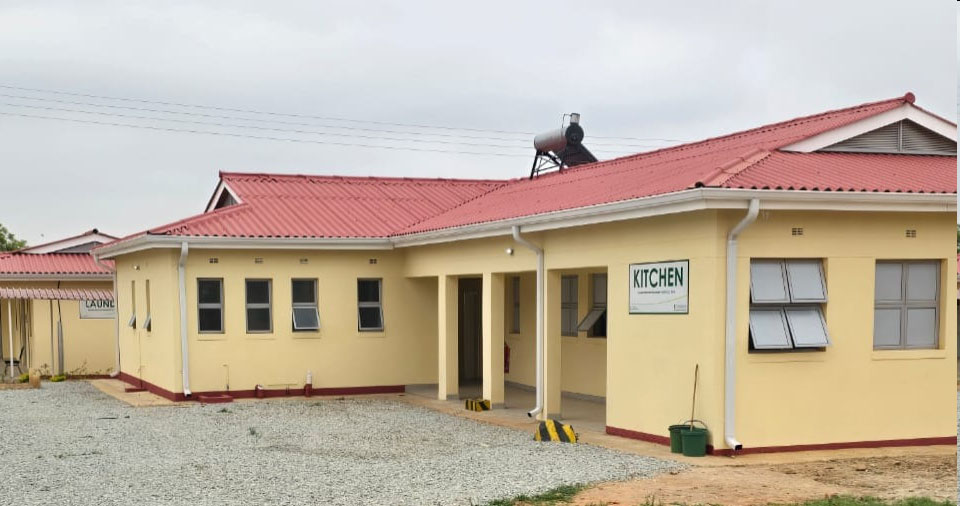
The project also included improvements to water and electricity supply, a tarred access road, a kitchen, and laundry facilities.
A notable addition is the 26-bed maternity wing, which is expected to enhance services for expectant mothers and newborns.
Before the upgrade, the hospital’s maternity department had only one delivery bed, plus a four-bed antenatal room and a four-bed postnatal room, which led to overcrowding.
The expanded maternity facility now offers more space for deliveries, postnatal care, and kangaroo mother care for premature and low-birthweight infants.
This practice involves prolonged skin-to-skin contact between a baby and caregiver to promote the baby’s health and development.
The new male and female wards accommodate 26 patients each, while the dedicated children’s ward offers improved facilities for young patients.
Previously, limited ward space led to overcrowding, forcing some patients to use temporary beds on the floor.
The construction of a new operating theatre is another significant development, as the hospital previously lacked a dedicated facility for surgical procedures.
This theatre is equipped with operating beds, anesthetic machines, patient monitors, suction equipment, and other instruments necessary for surgical care. It is expected to support both major and minor operations, including emergency obstetric procedures, depending on the availability of qualified staff and operational resources.
The hospital’s mortuary capacity has increased from two bodies to twelve, and the upgraded kitchen can now serve approximately 120 patients and staff.
Additional consultation rooms in the outpatient department are expected to ease congestion and improve patient management, while the new administration block will provide a better working environment for hospital staff.
Mohadi emphasized that this investment aims to address the disparity in healthcare services between urban and rural areas.
“For rural communities, where distance and transport costs hinder access to care, this hospital is an equity investment.
The quality of care a person receives should not depend on their location.”
He noted that expanded maternity and emergency facilities would let more people receive treatment closer to home, reducing the challenges of traveling long distances for medical services.
“Behind these figures are human stories. A mother can now deliver safely, close to home, in a dedicated ward.” He added, “The first minutes of an emergency are the most critical; with this hospital, life-threatening emergencies can be managed here in this district.”
Mohadi urged the Ministry of Health and Child Care and the Public Service Commission to ensure the hospital is adequately staffed and equipped with medicines and resources for effective operation.
“A hospital is only as good as the care it provides. Buildings and equipment alone do not constitute a health system; a hospital thrives through its doctors, nurses, midwives, pharmacists, laboratory staff, technicians, and support staff.”
He also called on healthcare workers to treat patients with dignity and compassion, while urging residents to protect the new facilities from vandalism and neglect.
Mohadi suggested that the government establish effective monitoring systems to ensure the investment continues to benefit communities in the long run.
At the same event, Mimosa Mining Company Managing Director Fungai Makoni noted that the project marked the completion of five years of planning, construction, and investment.
“Today represents the culmination of five years of effort.
During this period, Mimosa has invested over US$4.1 million in building and equipping this hospital.”
He acknowledged the company’s responsibility to contribute to the social and economic development of the communities surrounding its mining operations.
“At Mimosa, we recognize that mining occurs within communities that have genuine needs, aspirations, and expectations.
Our responsibility extends beyond running a successful business; it includes making meaningful contributions to the social and economic development of the communities in which we operate.”
Makoni said the project’s success will ultimately be measured by the quality of healthcare provided to patients, not the amount spent on construction.
For the more than 200,000 people the hospital serves, the expanded capacity and improved facilities offer greater access to medical care closer to home.
The long-term success of this investment will depend on ensuring the hospital has enough qualified staff, medicines, equipment, and maintenance resources to provide reliable healthcare services to the community.












Leave a Comment
Your email address will not be published. Required fields are marked with *