


Mthulisi Nxumalo Fear and panic have gripped the City of Gweru after the local authority began issuing 48-hour ultimatums to residents to remove illegal structures from their properties. Since last week, the council has been giving property owners 48 hours to demolish unauthorized structures or face demolition, as part of a citywide operation to enforce
Mthulisi Nxumalo
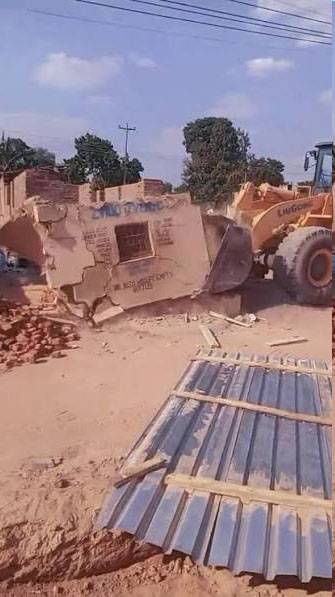
Fear and panic have gripped the City of Gweru after the local authority began issuing 48-hour ultimatums to residents to remove illegal structures from their properties.
Since last week, the council has been giving property owners 48 hours to demolish unauthorized structures or face demolition, as part of a citywide operation to enforce building and planning regulations.
This crackdown has already led to demolition notices being issued to property owners across the city.
The notices, which The Sun has seen, target structures such as illegally erected water tanks, durawalls, and sheds, instructing affected property owners to demolish them within 48 hours of receiving the notices.
Signed by Town Clerk Mr. Livingstone Churu, the notices cite Chapter 2, Section 56, Subsection 1(c) of the Zimbabwe Model Building By-Laws and warn that the council will proceed with demolitions if property owners fail to comply.
The notices also state that the costs of removing the structures will be charged to the affected property owners.
City of Gweru public relations officer Vimbai Chingwaramuse confirmed that the operation is targeting the entire city, although no demolitions had taken place at the time of reporting.
“We are currently issuing notices to demolish structures. We have not conducted any demolitions yet. We are targeting the entire city,” she stated.
Chingwaramuse explained that the operation aims to eliminate all unapproved structures in Gweru, urging residents to consult the local authority before starting any construction projects.
“We are conducting an operation to remove all illegal structures erected in Gweru. Whenever someone wants to erect a structure, they should approach the local authority for inspection and planning according to council by-laws,” she added.
The council’s approach includes notifying residents prior to taking enforcement action. Issuing public notices gives property owners the opportunity to regularize unauthorized developments, which local authorities consider standard procedure.
However, the 48-hour deadline adds pressure on those affected to act quickly.
Cornelia Selipiwe, executive director of the Gweru Residents and Ratepayers Association (GRRA), commended the council for issuing notices before demolishing structures, saying this approach gives property owners a chance to respond rather than being caught off guard.
“I commend our local authorities for providing the notice. By issuing the notices, they ensure that residents or owners of these illegal structures are not surprised,” he said.
Selipiwe also said this proactive approach could help maintain a better relationship between residents and local authorities, especially given complaints about demolitions in other parts of the country.
“We have been raising concerns about the demolitions occurring in Harare and nationwide. One of the reasons for these concerns is the lack of local authority oversight when these structures were built,” he explained.
He stressed that local authorities should take early action to address unauthorized developments and engage property owners to avoid situations where residents learn about planning violations only when demolition threats arise.
“If a local authority responds to illegal structures promptly and communicates with people to take corrective measures, we should commend and celebrate this initiative,” he said.
However, Selipiwe said the GRRA could not make a definitive assessment of the specific Gweru structures without examining them and understanding how they were built.
“I find it challenging to offer a decisive opinion on this matter because I haven’t seen the structures, nor do I know the background of these so-called illegal constructions,” he remarked.
The Gweru operation comes against a backdrop of similar enforcement efforts nationwide, with local authorities intensifying initiatives to remove unauthorized developments.
In Bulawayo, the city council began demolishing illegal structures at the Mpopoma Outspan Furniture Manufacturing Complex, popularly known as Espamprikeni, on November 2, an exercise that affected more than 400 informal traders.
The demolitions highlighted the difficult balance local authorities face between enforcing municipal regulations and protecting the livelihoods of informal traders and other affected residents.
In Harare, authorities have also pursued the removal of unauthorized developments, particularly structures erected on wetlands, road reserves and land reserved for public amenities.
Meanwhile, in Epworth, authorities have identified thousands of households for relocation from wetlands and unplanned areas as part of efforts to address illegal settlements and improve urban planning.
The developments have renewed debate over local authorities’ responsibility to monitor construction, enforce planning regulations, and ensure residents are adequately informed about the procedures required before building.














Leave a Comment
Your email address will not be published. Required fields are marked with *