


By Richard Shumba Hope Ncube, a mother of two, thought she was helping a work colleague when she received a request for money. Instead, she transferred US$100 to an EcoCash account after being deceived by someone she believed was her colleague, leaving her unable to recover the money despite reporting the incident to the police.
By Richard Shumba
Hope Ncube, a mother of two, thought she was helping a work colleague when she received a request for money.
Instead, she transferred US$100 to an EcoCash account after being deceived by someone she believed was her colleague, leaving her unable to recover the money despite reporting the incident to the police.
Ncube said someone using her colleague’s phone number contacted people on the colleague’s contact list requesting financial assistance. Believing the request was genuine, she transferred US$100 from her bank account to the mobile-money account.
“I genuinely thought I was helping my work colleague. I had no reason to believe that the person asking me for money was someone else,” Ncube said.
She discovered the deception when she followed up to establish whether her colleague had received the money.
“That was when I discovered that my colleague knew nothing about the conversation. I immediately reported the matter to the police, but my attempts to recover the US$100 were unsuccessful,” she said.
The incident is consistent with suspected impersonation fraud, a form of social engineering in which criminals exploit trust to persuade victims to transfer money. Because Ncube initiated the payment after being deceived, it may also fall within the category of authorised push payment (APP) fraud.
However, the precise method used to impersonate her colleague has not been established.
Her experience raises questions about how suspicious transactions are investigated, how banks and mobile-money operators cooperate when fraud is reported, and what avenues of redress are available to customers who lose money through deception.
The questions are particularly relevant as digital financial services expand and more people rely on electronic payments for everyday transactions.
Fraud risks in digital payments
Ncube’s experience comes amid other reported cases of fraud involving digital financial services in Zimbabwe.
In February 2026, 11 suspects appeared before a Harare magistrate in connection with an alleged phishing scheme involving 31 complainants and losses estimated at US$61,387, according to court reports. The suspects were accused of targeting EcoCash users with fraudulent offers of free mobile data.
According to the State’s allegations reported in court, victims were directed to fraudulent websites where they provided personal details. The suspects allegedly then obtained one-time passwords (OTPs), which enabled access to victims’ mobile-money accounts and the transfer of funds.
The allegations illustrate how criminals can exploit consumers’ trust in digital services to obtain financial information and steal money. The suspects’ alleged involvement does not, however, establish that every digital payment fraud case occurs through the same method.
Unlike phishing schemes that seek access to a victim’s account, Ncube’s case involved a request that persuaded her to transfer money herself. The distinction matters because the circumstances of how a transaction can affect a complaint is investigated and whether funds can be recovered.
Consumer protection and the right to redress
At the time of publication, EcoCash had told this publication that it was processing a response to questions about the case, but had not provided its substantive response.
The company’s published customer guidance states that wrong transfers can be reversed following checks involving the sender and recipient, provided the funds have not already been cashed out or withdrawn. Its terms and conditions also allow it to suspend or close wallets suspected of being used for fraud or other criminal activity. However, these provisions do not establish whether Ncube’s payment qualifies for reversal or what action was taken in her case.
The Reserve Bank of Zimbabwe’s March 2026 QR Code Payments Guideline sets out consumer protection requirements for QR-code payments, including clear reversal procedures and structured dispute resolution. It provides for disputes to be resolved within 14 working days and eligible refunds or reversals to be processed within five working days after liability has been determined. The guideline’s applicability to Ncube’s bank to EcoCash transfer, however, requires clarification.
Ncube’s case therefore raises questions about what procedures apply when a customer is deceived into making a payment, how quickly the receiving account can be investigated, and what assistance is available if the funds have already been withdrawn.
It also highlights the importance of cooperation between banks, mobile-money operators, telecommunications companies and law-enforcement agencies when investigating suspected digital payment fraud.
Harmonising payment systems and protecting consumers
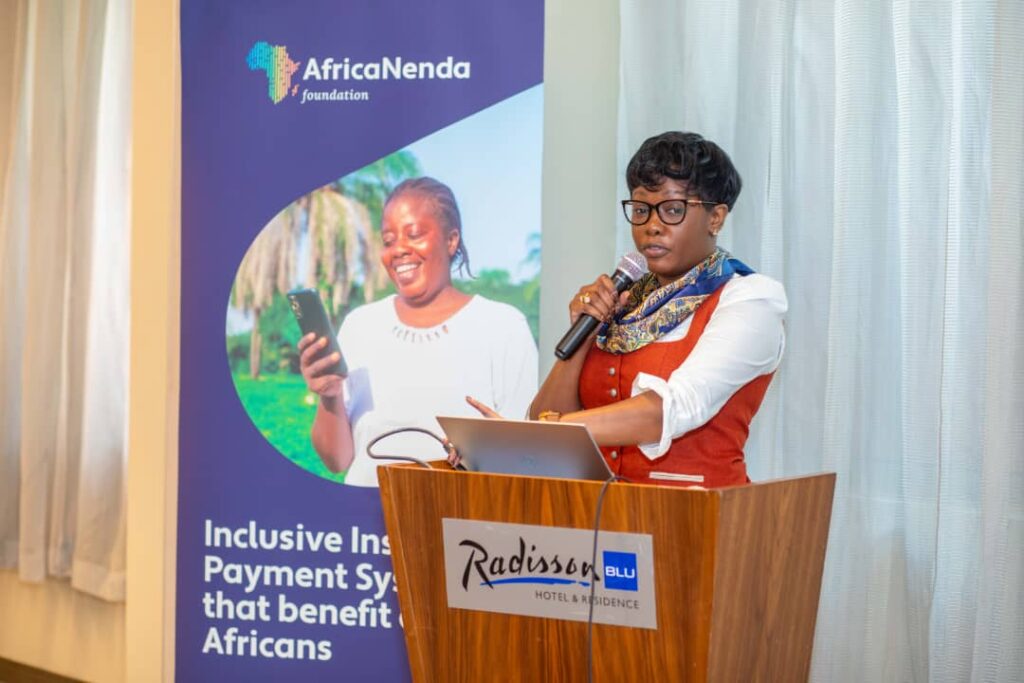
Speaking to this publication during discussions on digital financial services and payment harmonisation in Nairobi, Kenya, Jacqueline Jumah, director of advocacy and capacity development at AfricaNenda Foundation, called for stronger commitment from regulators and policymakers to harmonise digital financial services policies and regulations across Africa.
She emphasised the importance of stakeholder coordination, information sharing and aligning priorities to support the implementation of Africa’s digital financial services strategy and roadmap.
“The payment fails at the border because the rules do not travel with it,” Jumah said, describing the difficulties that can arise when payment systems operate under different national rules.
Jumah said harmonisation should not be understood simply as building another payment platform. Rather, it involves aligning regulations and operational requirements so existing and emerging payment systems can work together more effectively.
Such alignment may involve licensing, interoperability standards, consumer protection, data governance, supervision, settlement and liquidity arrangements.
For businesses and consumers, better coordination could reduce the costs and delays associated with cross-border payments, making regional trade more accessible to small businesses and traders.
However, harmonisation and interoperability should not be confused with fraud prevention. Connecting payment systems does not automatically prevent impersonation or guarantee that stolen funds can be recovered.
Better coordination could support the exchange of relevant fraud alerts and communication between financial institutions when suspicious transactions are reported. Its effectiveness would depend on the safeguards, reporting procedures and arrangements for resolving disputes that participating institutions put in place.
John Muthiora, a technical payment specialist who presented on building inclusive instant payment systems during AfricaNenda’s training in Nairobi, identified strong central-bank leadership, clear governance, collaboration across the financial ecosystem, user-centred design, stakeholder participation, capacity building and continuous improvement as important characteristics of successful payment systems.
Jude Fuhnwi, AfricaNenda’s media lead, also highlighted challenges to implementing inclusive instant payment systems, including regulatory readiness, technical interoperability, stakeholder coordination, funding and sustainability, institutional capacity, and consumer trust and adoption.
For consumers, these issues extend beyond how quickly money moves. They include whether people can access payment services, understand the risks, report suspected fraud and obtain meaningful responses when something goes wrong.
Whether stronger coordination between financial institutions would have helped Ncube recover her money remains unclear. That would depend on the circumstances of the transaction, the movement of the funds and the actions taken by the institutions involved.
The wider African opportunity
Beyond consumer protection, harmonising digital financial services regulations could help African countries connect their payment systems and facilitate cross-border trade.
Dr Patrick Ndzana Olomo, head of economic policy and sustainable development at the African Union Commission, highlighted the economic opportunities associated with Africa’s expanding digital economy.
“We are creating a world of wealth and it is a huge market,” Olomo said.
A more connected African payments ecosystem could enable individuals and businesses to transact across borders more efficiently. Differences in national regulations, licensing requirements, settlement arrangements and currency-conversion processes can, however, complicate transactions and increase costs.
Harmonisation aims to improve coordination and establish more consistent conditions for cross-border payments. It does not necessarily require the creation of a new payment platform or a single African central bank. Its effectiveness will depend on how countries align their rules, implement agreed standards and ensure that the resulting systems work for the people and businesses expected to use them.
Making digital payments work for consumers
For Ncube, the immediate concern was not the cost of sending money across a national border, but the inability to recover money after being deceived by someone impersonating a trusted colleague.
Her experience illustrates a consumer-protection concern that deserves attention as digital financial services expand. However, the available information does not establish that regulatory fragmentation caused her loss or that harmonisation would have guaranteed recovery.
The case raises questions that still require answers from the relevant institutions, whether the recipient account was investigated, whether the funds could be traced, what action was taken after the incident was reported, and what options are available to customers who fall victim to similar scams.
As African countries seek to connect their payment systems and deepen regional trade, improvements in speed, affordability and interoperability must be accompanied by effective consumer safeguards.
For consumers, the measure of progress is not simply whether money can move instantly. It is also whether fraud is addressed effectively and whether people have meaningful avenues for redress when their trust is exploited.



















Leave a Comment
Your email address will not be published. Required fields are marked with *