


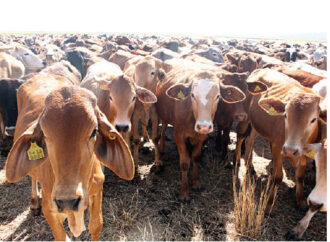
Villagers in the Midlands Province, are facing severe consequences from a deadly outbreak of livestock diseases that has decimated cattle herds. This situation has stripped households of essential draught power and forced desperate farmers to sell their remaining animals at drastically reduced prices. The outbreak of January Disease, along with Foot-and-Mouth Disease (FMD), has reportedly
Villagers in the Midlands Province, are facing severe consequences from a deadly outbreak of livestock diseases that has decimated cattle herds. This situation has stripped households of essential draught power and forced desperate farmers to sell their remaining animals at drastically reduced prices.
The outbreak of January Disease, along with Foot-and-Mouth Disease (FMD), has reportedly led to significant losses since the start of the year, with some households losing more than 10 cattle as farmers struggle to manage these dual threats.
For communities that rely heavily on cattle for draught power, manure, milk, breeding, and income, these losses threaten to exacerbate the economic hardships already experienced in some villages due to poor or mixed harvests.
Chief Sogwala in lower gweru expressed concern over the increasingly alarming situation, despite efforts by the Department of Veterinary Services to educate farmers and promote livestock dipping. “There is an outbreak of January Disease, and herds are depleting. They are finished. Some families have lost more than 15 cattle, while others have lost over 20,” he said.
The traditional leader emphasized that the government needs to urgently assess the extent of livestock losses and enhance interventions to prevent the situation from worsening.
He noted that the disease outbreak is compounding food security challenges in some communities. “The shortage of dipping chemicals has become a major concern for farmers who rely on communal dip tanks to control ticks, which transmit diseases like January Disease,” he explained.
“Some farmers had good harvests, while others did not. Those in the farming areas who obtained enough yields have food, but there are challenges in some villages,” Chief Sogwala added.
Mr. Charles Sibanda, a villager from Ward 9, mentioned that farmers who have seen their herds diminish since January are now resorting to distress sales, letting go of cattle at low prices in a desperate bid to recover something before the disease claims their remaining animals.
He pointed out, “The loss of draught animals is a significant concern at a time when communal farmers depend on cattle for preparing fields and transporting agricultural produce.
The livestock losses pose the most immediate threat, and we are urgently appealing for intervention to protect the remaining animals and rebuild herds devastated by this outbreak.”
Cde Brown Ndlovu, the legislator for Vungu Constituency, confirmed the impact of both diseases, stating that farmers are struggling to manage the outbreaks, particularly Foot-and-Mouth Disease, which has severely affected Wards 3, 9, and others. He noted, “It is very unfortunate that farmers are fighting a losing battle, especially with Foot-and-Mouth Disease.”
Cde Ndlovu assured the public that the government is working to ensure that adequate dipping chemicals are made available to communal farmers.
Farmers are currently facing a pressing challenge regarding the dipping chemicals for their cattle.
These cattle must be dipped at least once every five to six days. Therefore, efforts are underway to ensure the necessary chemicals are available at communal dip tanks.
One major concern is January Disease, also known as theileriosis, a tick-borne illness that can cause high mortality rates in cattle, particularly in areas where prevention and early treatment measures are lacking. Another serious concern is Foot-and-Mouth Disease, a highly contagious viral infection affecting cloven-hoofed animals. This disease can have severe implications for livestock production, as well as for the movement and marketing of cattle.
“The simultaneous outbreak of these diseases poses a threat not only to household livestock assets but also to the broader rural economy. With fewer cattle available for breeding, draft power, and sale, the impact is significant,” Chief Sogwala stated.
He also highlighted the livestock crisis occurring alongside other challenges faced by communities in the constituency. Chief Sogwala expressed worries about rising incidents of violence, murder, and drug abuse, attributing these issues to an influx of artisanal miners seeking gold in the area.
“We have mines where people from various parts of the country—such as Matabeleland and Mashonaland—are coming to prospect for gold. Unfortunately, this influx is contributing to the rising rates of violence and murder,” he explained.
To combat drug abuse and related social problems, Chief Sogwala mentioned that police and traditional leaders are conducting awareness campaigns at mining sites. “They are visiting the mines to raise awareness about drug and substance abuse, which has become a significant issue in the area,” he added.
Additionally, poor road infrastructure is exacerbating the economic challenges faced by villagers. Transport operators have raised fares because of deteriorating road conditions.
Vungu Ward 2 Councilor Elias Mbiva noted that there was a time when passengers were paying as much as US$5 for transport, but discussions with transport operators have led to a reduction in fares.
“Because of the roads, transport prices fluctuated. Initially, we were paying US$3, but when transport operators complained that their vehicles were breaking down because of the poor road conditions, they raised fares to US$5. However, after engaging with them, the fares have now been lowered,” he said.
He also mentioned that villagers have taken to manually filling potholes using equipment provided by the Rural Infrastructure Development Agency (RIDA) during monthly National Clean-Up Days.
















Leave a Comment
Your email address will not be published. Required fields are marked with *