


By Pamenus Tuso Tobacco remains Zimbabwe’s single largest foreign currency earner, generating more than US$1 billion in annual export receipts, according to figures routinely cited by the Zimbabwe Tobacco Association (ZTA) and industry regulators. The sector supports over 300,000 farming households, most of them small-scale growers delivering their crop through auction floors rather than structured
By Pamenus Tuso
Tobacco remains Zimbabwe’s single largest foreign currency earner, generating more than US$1 billion in annual export receipts, according to figures routinely cited by the Zimbabwe Tobacco Association (ZTA) and industry regulators.
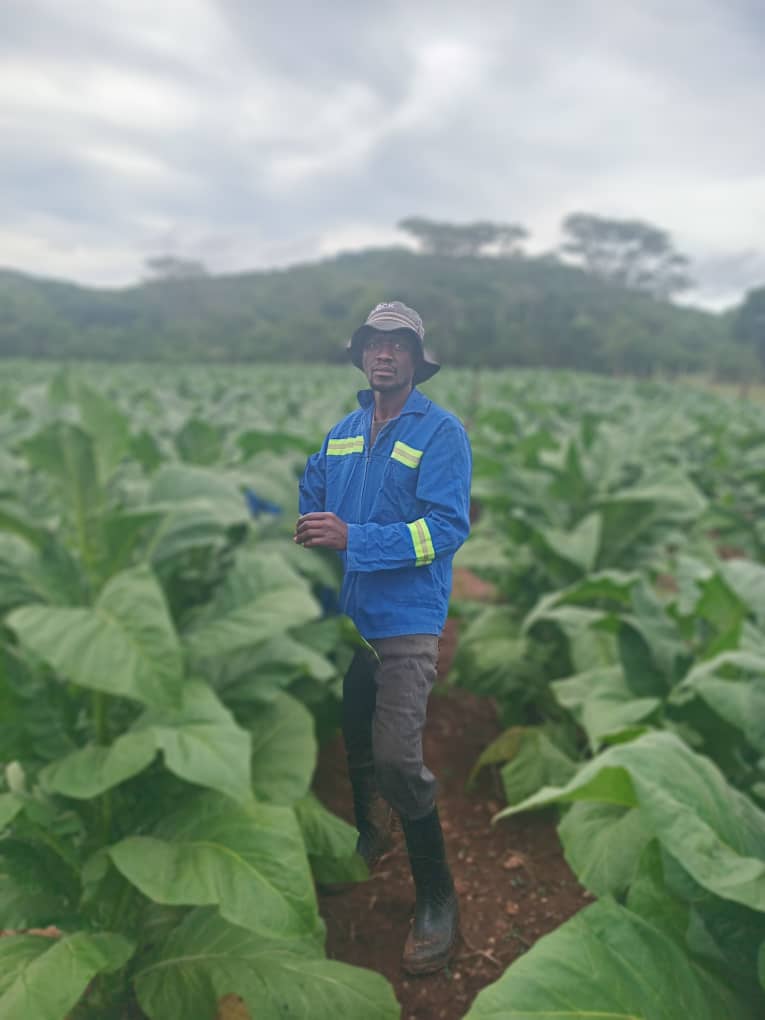
The sector supports over 300,000 farming households, most of them small-scale growers delivering their crop through auction floors rather than structured contract schemes.
Yet despite the crop’s importance to the national economy, insurance coverage among small-scale farmers remains strikingly low, leaving the backbone of the industry dangerously exposed to climate shocks.
At the regulatory level, the Insurance and Pensions Commission (IPEC) admits that the absence of disaggregated insurance data has made it difficult to quantify the extent of the problem.
Tapiwa Chengeta, IPEC Insurance Technical Manager said the Commission currently does not collect crop-insurance statistics broken down by farmer category or crop type.
“At present, IPEC does not collect crop-insurance data at a level that allows us to disaggregate uptake specifically among tobacco farmers nor to distinguish between commercial and small-scale producers,” said Chengeta in an interview with The Sun.
As a result, he said the regulator cannot directly compare insurance uptake between the two groups or relate coverage levels to each group’s contribution to total tobacco output.
However, what IPEC confirmed is that agricultural insurance remains a relatively small segment of the insurance market.
According to Chengeta, farming insurance contributed approximately 10 percent of total insurance industry revenue in the third quarter of 2025, ranking behind motor and fire insurance.
Tobacco insurance constitutes a significant portion of this agricultural portfolio, a pattern that suggests coverage is concentrated among commercial and contracted growers while small-scale farmers operating outside formal value-chain arrangements remain largely uninsured.
For farmer representatives, the low insurance uptake reflects deeper structural imbalances within the tobacco value chain. Zimbabwe Tobacco Growers Association (ZTGA) president George Serem we said farmers have long carried the bulk of production risk while enjoying limited protection.
“The imbalance within the tobacco value chain has always been there. Risk is always being shouldered by the farmers which is very unfortunate,” Seremwe said.
He added that while some contracted growers are insured through merchant-led schemes, many farmers are either unaware that such insurance exists or do not understand the procedures for reporting losses.
“The unfortunate part is that it remains silent. Some growers do not even know they are insured or how to report if they have been affected,” he said.
Seremwe said this lack of awareness has contributed to low claims uptake and frustration when claims are delayed or poorly explained.
According to ZTGA, the association has stepped up advocacy and farmer education to encourage growers to understand the contracts they sign, report losses within stipulated periods and demand clarity on insurance provisions embedded in contracting arrangements.
From a regulatory standpoint, IPEC acknowledges that while it cannot statistically prove that small-scale tobacco farmers are less insured than commercial producers, international and local experience points to recurring barriers.
Chengeta said these typically include affordability constraints, limited awareness of insurance as a risk-management tool, uneven access to finance and product designs that are not always aligned to smallholder realities.
He said IPEC is working with government, insurers and development partners to address these challenges through insurance education programmes, targeted subsidies and supervision of index-based insurance products designed with small-scale farmers in mind.
On the underwriting side, insurers concede that the small-scale tobacco segment remains largely untapped.
Dumisani Nyoni, Managing Director of Sanctuary Insurance confirmed that the company currently insures about 200 tobacco farmers mainly within the commercial and contracted farming space.
“The small-scale growers scheme has not yet commenced as the product is still under development,” Nyoni said.
He explained that Sanctuary is refining the product to ensure pricing adequacy, operational readiness and alignment with regulatory guidelines before it is rolled out to smallholder farmers.
The Managing Director revealed that Sanctuary currently offers three core tobacco insurance products namely: hail cover, wind cover and a Field-to-Floor package which protect growers against key weather-related risks affecting tobacco production.
However, he acknowledged that low uptake among small-scale farmers is strongly linked to limited understanding and mistrust. “Many farmers do not fully appreciate what crop insurance covers, how claims are assessed or why premiums are necessary. Some only engage once a loss event has occurred,” Nyoni said.
He added that misconceptions that insurance is only for large commercial farmers continue to discourage participation among smallholders.
Climate change has further intensified the urgency of closing the insurance gap.
Dr Anglistone Sibanda, Chief Executive Officer of the Climate Action Council of Zimbabwe said rising temperatures and the increasing frequency and severity of extreme weather events are fundamentally reshaping agricultural risk.
“Small-scale farmers are often the hardest hit by climate change shocks due to low adaptation capacity and limited access to finance,” Sibanda said.
He described crop insurance as “very critical” in helping farmers cope with climate-induced losses and build resilience.
Sibanda warned that climate change is now affecting not only tobacco yields but also leaf quality with implications for export competitiveness.
He pointed to emerging global trade measures such as the European Union’s Carbon Border Adjustment Mechanism, which will require exporters to disclose embedded carbon in their products.
“If nothing is done, Zimbabwe could lose up to 30 percent of its market share by 2030,” Sibanda said further arguing that insurers, banks and pension funds should play a role in financing decarbonisation and climate-proofing initiatives through instruments such as green bonds and carbon-backed risk-transfer mechanisms.
In response to these emerging risks, IPEC says it has strengthened its regulatory approach to agricultural insurance. Chengeta said the Commission has supported the development of index-based insurance products and facilitated regulatory sandboxes to allow innovation under controlled conditions.
One such initiative, the Farmers’ Basket Index Insurance, was piloted in Goromonzi district during the 2023–2024 farming season, enrolling about 4,000 small-scale maize farmers and paying out claims following El Niño–induced drought conditions.
According to IPEC, the programme has since been scaled up to one district in each of the country’s eight rural provinces, providing a potential model for extending similar cover to tobacco farmers.
Despite these regulatory and industry efforts, scepticism remains strong among small-scale growers.
A tobacco farmer Wonder Musara from Mashonaland Central said the high cost of inputs makes insurance premiums difficult to prioritise.
“We struggle to pay for seed, fertiliser and labour. Insurance feels like another unnecessary cost and when disaster strikes, we do not see quick help,” noted Musara.
Another small-scale grower from Umguza cited poor communication and lack of trust.
“No one has ever explained clearly how tobacco insurance works. We hear about claims not being paid, so people lose confidence,” he said.
As Zimbabwe continues to rely on tobacco to underpin foreign currency inflows, stakeholders agree that leaving small-scale farmers uninsured represents a growing systemic risk.
Without improved data collection by regulators, greater product innovation by insurers and sustained education and engagement at farmer level, smallholders will continue to bear disproportionate climate and production risk.
As Seremwe warns, protecting farmers is not only a social issue but an economic imperative.
“If farmers fail, the whole value chain fails,” he warned.

















Leave a Comment
Your email address will not be published. Required fields are marked with *